
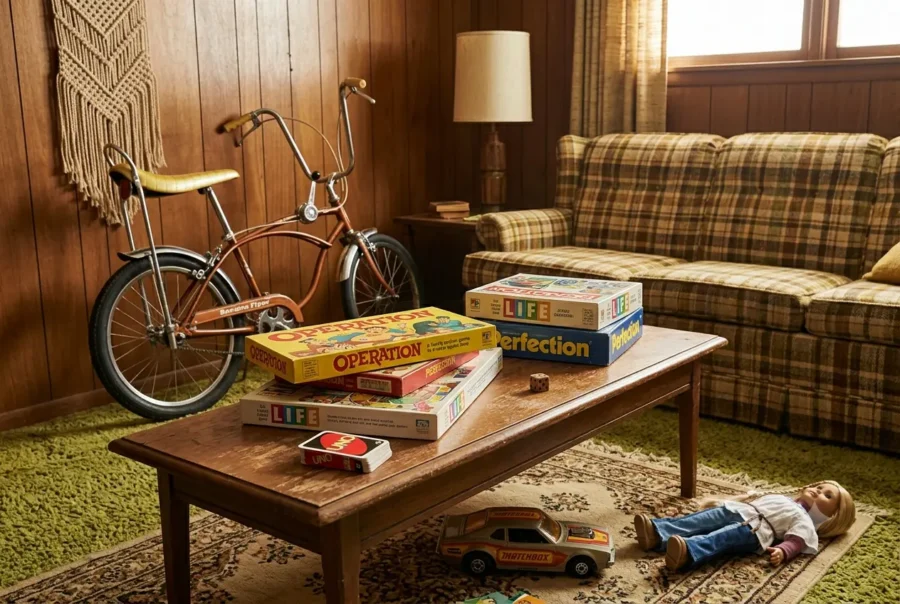
The 1970s were filled with colors, sounds, household objects, and family routines that still feel familiar to millions of Americans.
This guide takes you through the most memorable details — from living rooms and kitchens to telephones, televisions, music, toys, and everyday objects that defined the decade.
✅ Memories included in this guide
📺 What made 1970s living rooms instantly recognizable
🍽️ Which colors and appliances defined family kitchens
☎️ How people communicated before smartphones and the internet
🎵 How families listened to music and watched television
📸 Which everyday objects still bring back strong memories
Why the 1970s Feel Familiar
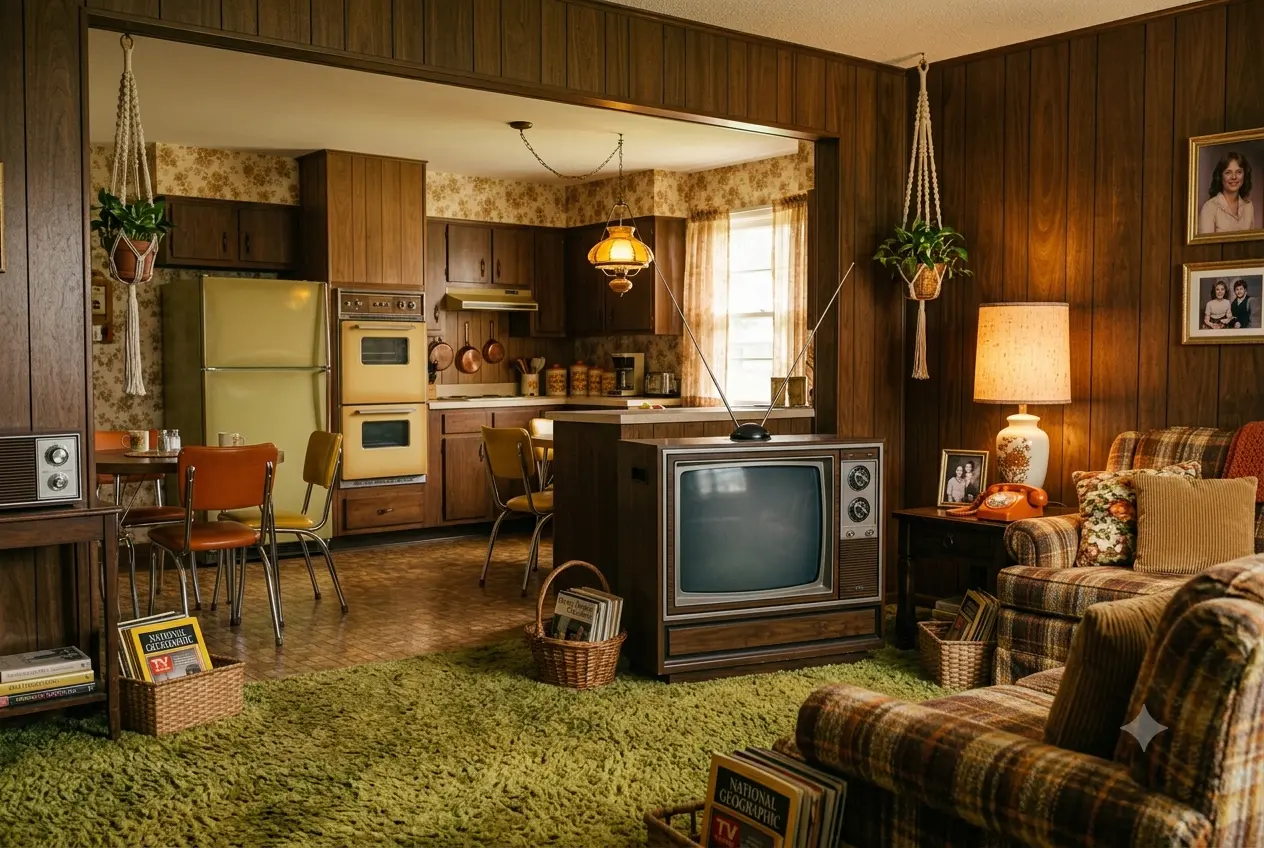
The 1970s had a visual identity that was difficult to miss.
American homes often featured warm earth tones, bold patterns, wood finishes, textured fabrics, and appliances designed to remain visible for years.
Living rooms were places where families watched television together. Kitchens often served as the center of daily conversation. Telephones stayed attached to the wall, and music was selected one record at a time.
Many of these objects were ordinary at the time.
Today, they can instantly remind people of childhood homes, grandparents, family dinners, school mornings, holidays, and quiet weekends.
Nostalgia often begins with a small detail. A familiar color, sound, pattern, or household object can bring back an entire room and the people who once gathered there.
Rooms That Defined the Decade
Each part of a 1970s home had its own personality.
The living room usually centered around the television. The kitchen combined practical appliances with bold colors. Bedrooms reflected music, sports, toys, and personal interests.
Even hallways, basements, and family rooms contained objects that became symbols of the era.
1. The Family Living Room
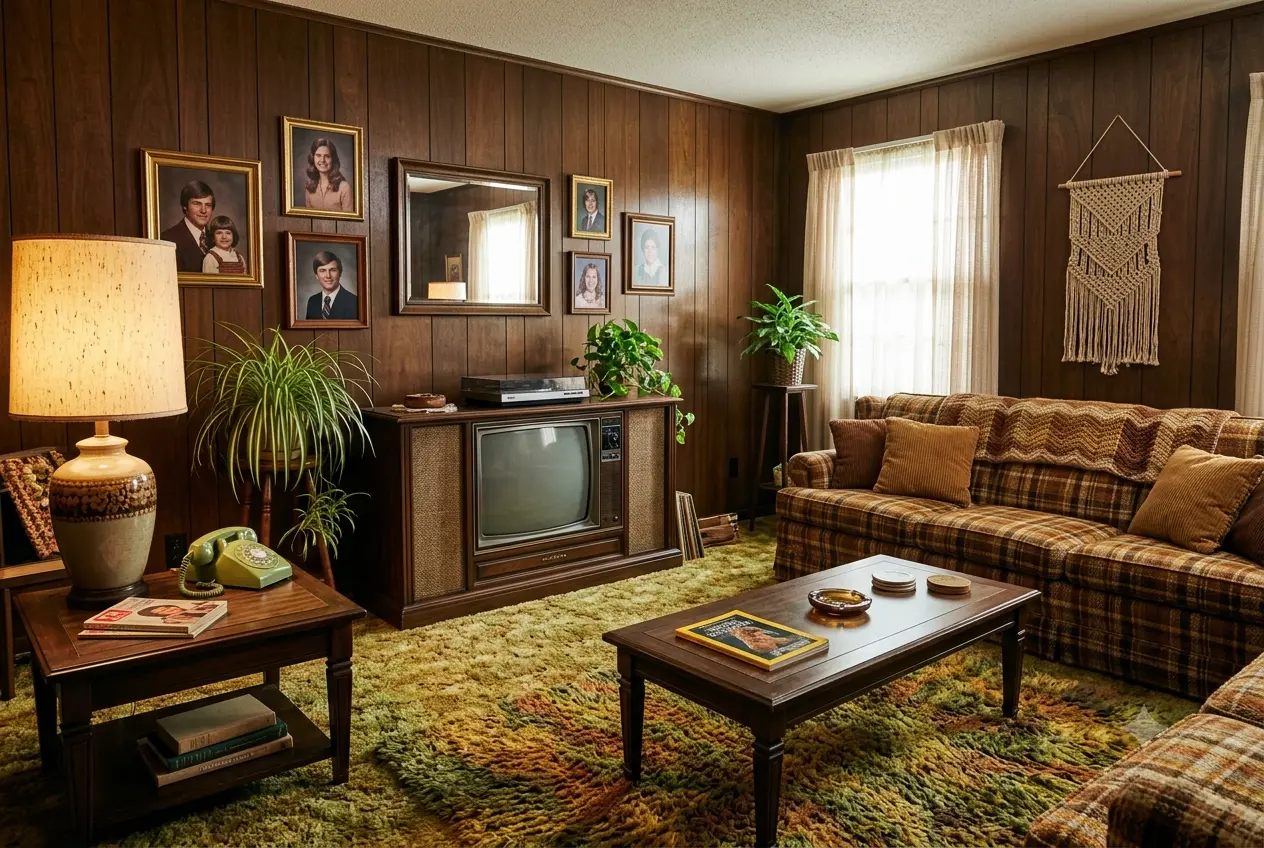
For many households, the living room was the main gathering place.
It was where families watched evening programs, welcomed visitors, opened holiday gifts, and spent time together after dinner.
📺 A large television inside a wood-style cabinet
🛋️ Patterned sofas with textured or floral fabric
🟠 Orange, brown, gold, and avocado green accents
🪵 Wood paneling on walls, cabinets, or furniture
🧶 Shag carpeting that covered much of the floor
The television was often one of the most noticeable objects in the room.
Unlike modern flat screens, many sets were large, heavy, and designed to look like permanent pieces of furniture.
A television could remain in the same place for years, surrounded by framed photographs, decorative lamps, magazines, and family keepsakes.
2. The Colorful Kitchen
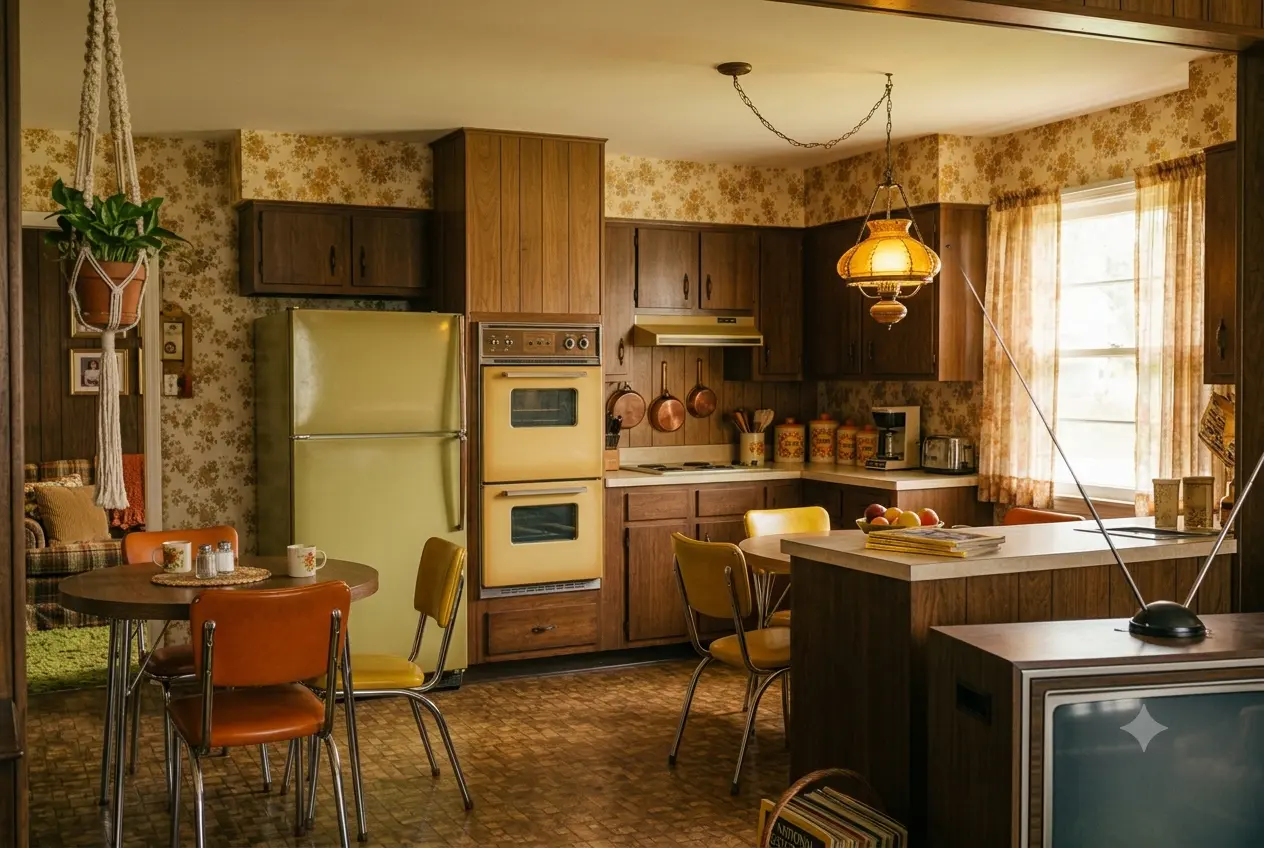
The kitchen was one of the most distinctive rooms in a 1970s home.
Colors that might seem unusual today appeared on refrigerators, ovens, countertops, cabinets, dishes, and wallpaper.
🥑 Avocado green refrigerators and appliances
🌻 Harvest gold ovens, mixers, and cookware
🟠 Burnt orange dishes and decorative accents
🌼 Floral wallpaper and patterned curtains
🥫 Metal canisters labeled for flour, sugar, coffee, and tea
Many kitchens also had handwritten recipe cards, plastic containers, wall clocks, and calendars from local businesses.
The kitchen table was more than a place to eat.
It was where families discussed their day, children completed homework, bills were organized, and recipes were shared from one generation to another.
3. Bedrooms With Personality
Bedrooms often reflected the interests of the person who used them.
Children and teenagers decorated their walls with posters, sports pennants, album covers, photographs, and magazine clippings.
Toy boxes, colorful blankets, stuffed animals, model cars, dolls, and battery-powered toys.For teenagers:
Record players, posters, radios, magazines, school photos, and collections of favorite albums.For adults:
Wood furniture, floral bedspreads, alarm clocks, reading lamps, and framed family photographs.
Before personal screens became common, bedrooms were generally quieter spaces.
Music came from a radio or record player, and entertainment often involved books, magazines, toys, or hobbies.
4. Basements and Family Rooms
Many homes had a basement or family room used for less formal gatherings.
These rooms could include older furniture, game tables, televisions, storage shelves, tools, and collections accumulated over many years.
🎱 Pool tables and tabletop games
🃏 Card tables used during family gatherings
🧰 Workbenches and household tools
📦 Boxes filled with photographs and holiday decorations
📻 Older radios or televisions moved from another room
These spaces were often where children played, adults worked on projects, and families stored items they were not ready to discard.
Everyday Objects People Remember
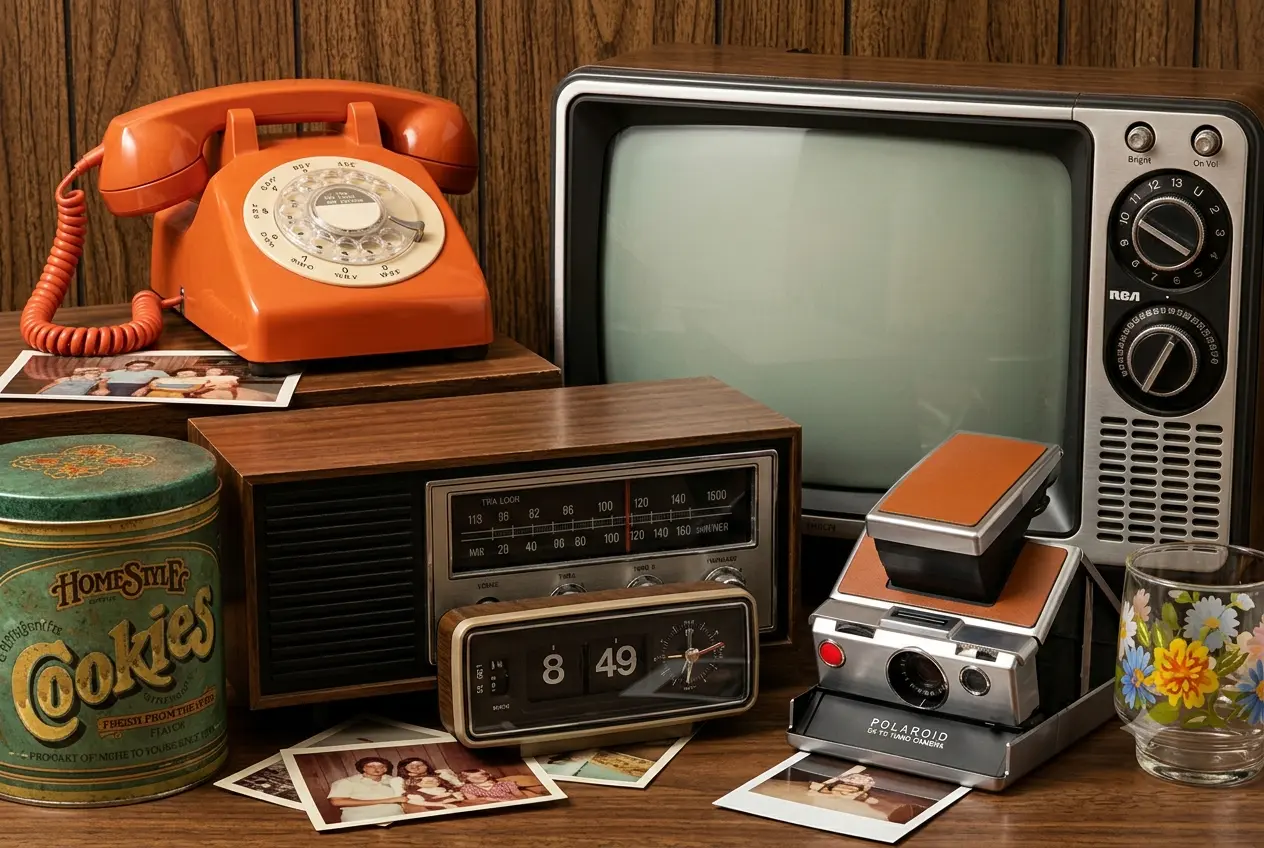
Some of the strongest memories from the decade are connected to ordinary objects.
They were handled every day, remained in the same place, and became part of the rhythm of home life.
☎️ Rotary Telephones
A telephone usually stayed on a wall, desk, or small table. Long cords gave people a little privacy, but conversations still happened in shared family spaces.
Remember more household objects
📺 Television Dials
Changing the channel required walking to the television and turning a dial. Viewers chose from a limited number of channels and usually watched programs at a scheduled time.
Explore classic television memories
📻 Tabletop Radios
Radios delivered music, weather, sports, local news, and conversation. Many people began or ended their day listening to a familiar station.
See more sounds from the decade
📸 Instant Cameras
Instant photographs made it possible to watch an image appear within minutes. The slightly faded colors became part of the look people now associate with family memories.
Who Remembers These Objects?
People experienced the decade differently depending on their age, location, family, and lifestyle.
However, many objects appeared in homes across different parts of the country.
👨👩👧 Families — gathered around one television and shared the same living spaces
🧒 Children — played with toys, bicycles, board games, and outdoor equipment
🎵 Teenagers — collected records, listened to radio stations, and decorated rooms with posters
🍽️ Home cooks — used handwritten recipes, colorful cookware, and familiar kitchen appliances
🧰 Homeowners — repaired, reused, and maintained objects for many years
Not every American home looked the same.
Regional traditions, family income, housing style, and personal taste created important differences.
Still, certain colors, designs, sounds, and objects became widely recognized symbols of the period.
A Walk Through a 1970s Home
Step 1. Enter the living room and notice the large television, patterned furniture, wood finishes, and family photographs.
Step 2. Walk into the kitchen and look for colorful appliances, metal canisters, floral patterns, and handwritten recipes.
Step 3. Listen for the telephone ringing, a radio playing, or a record turning on the stereo.
Step 4. Open a cabinet and find glassware, plastic containers, serving dishes, and appliances made for daily use.
Step 5. Look through a photo album and recognize holidays, birthdays, vacations, school events, and ordinary afternoons.
Try to remember the home where you spent the most time during the decade. The floor, wallpaper, furniture, sounds, and even the position of the telephone may still be easy to picture.
Details That Bring Memories Back
A complete room is not always necessary to trigger a memory.
Sometimes one small object is enough.
📞 A telephone cord — stretched across a room during a long conversation
📺 A television guide — used to see when a favorite program would air
🍪 A metal cookie tin — later reused for sewing supplies or household items
⏰ A flip-style alarm clock — placed beside the bed
🥛 A patterned drinking glass — used every day at family meals
Other familiar details may include a wall calendar, a ceramic lamp, an ashtray, a magazine rack, a bread box, a kitchen timer, or a decorative clock.
These objects were not necessarily expensive or unusual.
Their importance came from being present during ordinary moments that later became meaningful memories.
Television Before Streaming
Television in the 1970s required more patience and planning than it does today.
Programs were shown at specific times. Missing an episode often meant waiting for a rerun. Families frequently watched the same screen together because most homes did not have a television in every room.
📺 Viewers selected channels using a dial
📰 Program schedules appeared in newspapers and television guides
📡 Reception could change depending on the antenna
👨👩👧 Family members often watched the same programs together
⏰ Favorite shows became part of a weekly routine
Commercial breaks gave people time to visit the kitchen, answer the telephone, or talk about what they were watching.
Because viewing choices were more limited, popular programs often became shared cultural experiences.
Music Before Digital Playlists
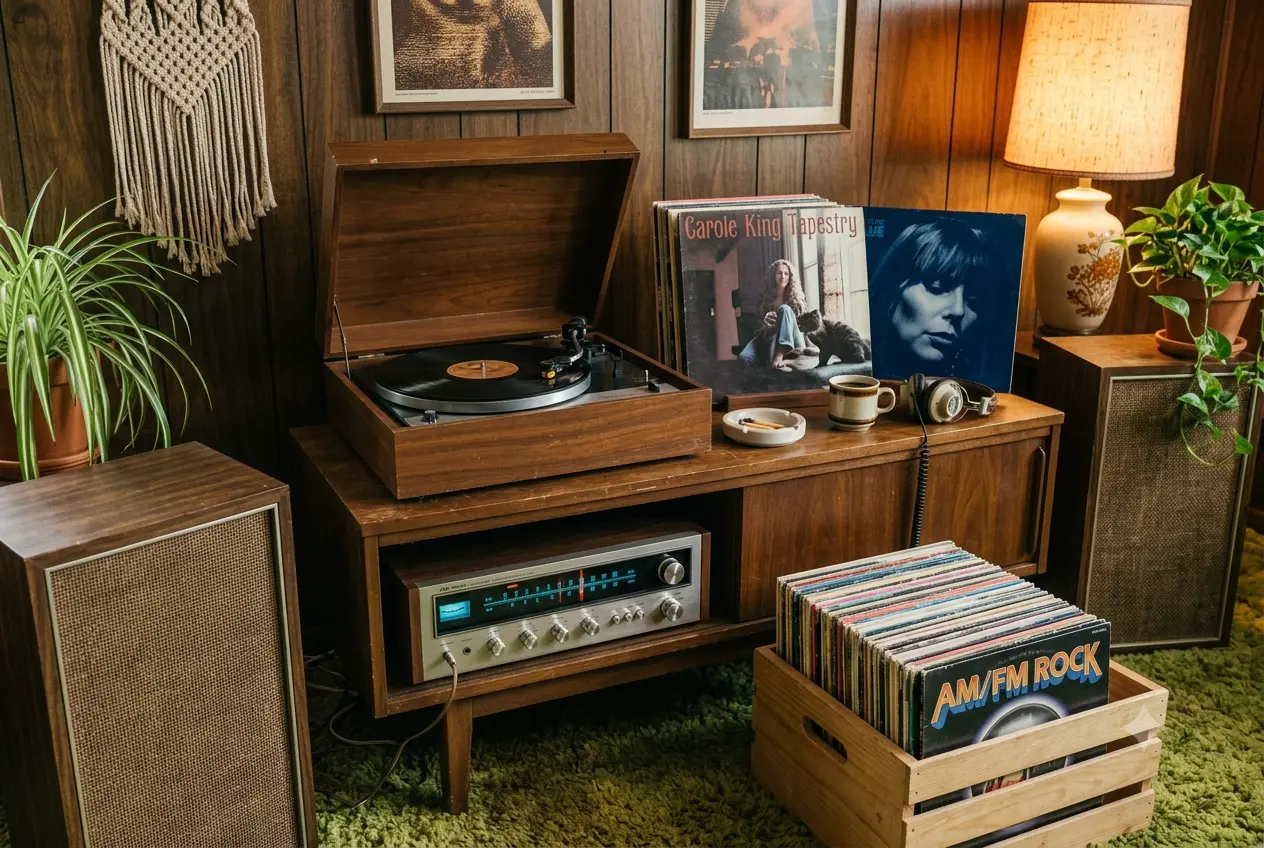
Music was something people selected, handled, and organized physically.
Choosing an album involved removing the record from its sleeve, placing it on the turntable, and lowering the needle.
🎵 Vinyl records arranged in cabinets or milk crates
📼 Cassette tapes labeled by hand
📻 Portable radios used at home and outdoors
🎙️ Favorite songs recorded directly from the radio
🔊 Large speakers displayed as part of the room
Album covers were part of the experience.
People studied photographs, lyrics, artwork, and production details while listening to the music.
A record collection could show a person’s interests, age, memories, and changing taste over time.
Telephones Stayed in One Place
A household telephone was shared by everyone.
It might be mounted in the kitchen, placed in a hallway, or kept on a table in the living room.
There was no private contact list, text history, or silent notification.
☎️ Numbers were memorized or written in an address book
📒 Important contacts stayed near the telephone
🪙 Pay phones were used while away from home
📞 Long-distance calls were often kept brief
👂 Family members could sometimes hear part of the conversation
Calling someone required a little more intention.
People generally needed to know where the person would be and whether someone else might answer first.
Family Photos Were Physical
Photographs were printed, stored, and shared by hand.
People often waited days or weeks to see images after a roll of film was developed.
📸 Photo albums organized by year or family event
🖼️ Framed portraits displayed in living rooms and hallways
✉️ Printed photographs mailed to distant relatives
📦 Extra pictures stored inside envelopes, drawers, or boxes
📝 Names and dates written on the back of photographs
Because fewer photographs were taken, each image could feel more important.
A single picture might become the main record of a birthday, holiday, school event, or family vacation.
Kitchen Items Built for Daily Life
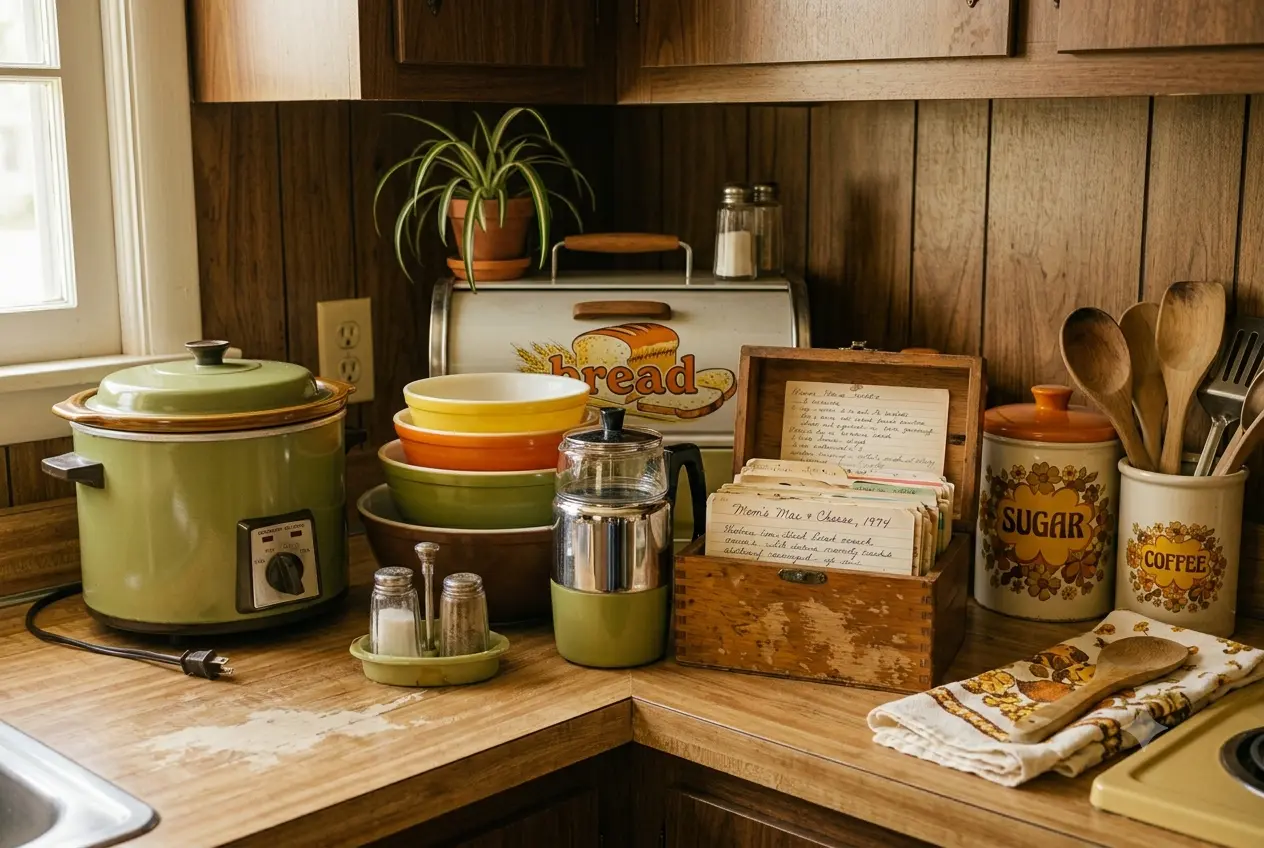
Many kitchen objects were designed for frequent use and remained in the family for years.
Some were later passed to children or grandchildren.
🥣 Mixing bowls in stacked sizes
☕ Percolators used for morning coffee
🍞 Metal or wooden bread boxes
🥫 Canisters for basic cooking ingredients
📖 Recipe boxes filled with handwritten cards
🍲 Slow cookers and electric skillets
Recipes were often learned through observation rather than videos.
Measurements might be approximate, and instructions could include family phrases that made sense only to the people who used them.
Popular Colors and Patterns
The decade is often remembered for a warm and earthy color palette.
These colors appeared throughout the home rather than in only one room.
🥑 Avocado green — appliances, cookware, carpets, and bathroom fixtures
🌻 Harvest gold — refrigerators, ovens, curtains, and decorative objects
🟠 Burnt orange — sofas, dishes, wall art, and patterned fabric
🟤 Dark brown — wood paneling, furniture, cabinets, and trim
🌼 Large floral patterns — wallpaper, curtains, bedspreads, and upholstery
Geometric shapes were also common.
Circles, stripes, waves, flowers, and repeating patterns could cover an entire wall, sofa, or set of curtains.
Furniture That Filled the Room
Furniture was often larger and visually heavier than many modern designs.
Wood finishes, thick cushions, and decorative patterns made each piece noticeable.
🛋️ Long sofas with floral or geometric upholstery
🪑 Recliners placed near the television
🪵 Coffee tables made from dark wood
💡 Large lamps with textured shades
📚 Entertainment cabinets with shelves and storage
Matching furniture sets were common.
A sofa, chair, and loveseat might share the same fabric, while end tables and lamps created a coordinated room.
Toys and Games Before Screens
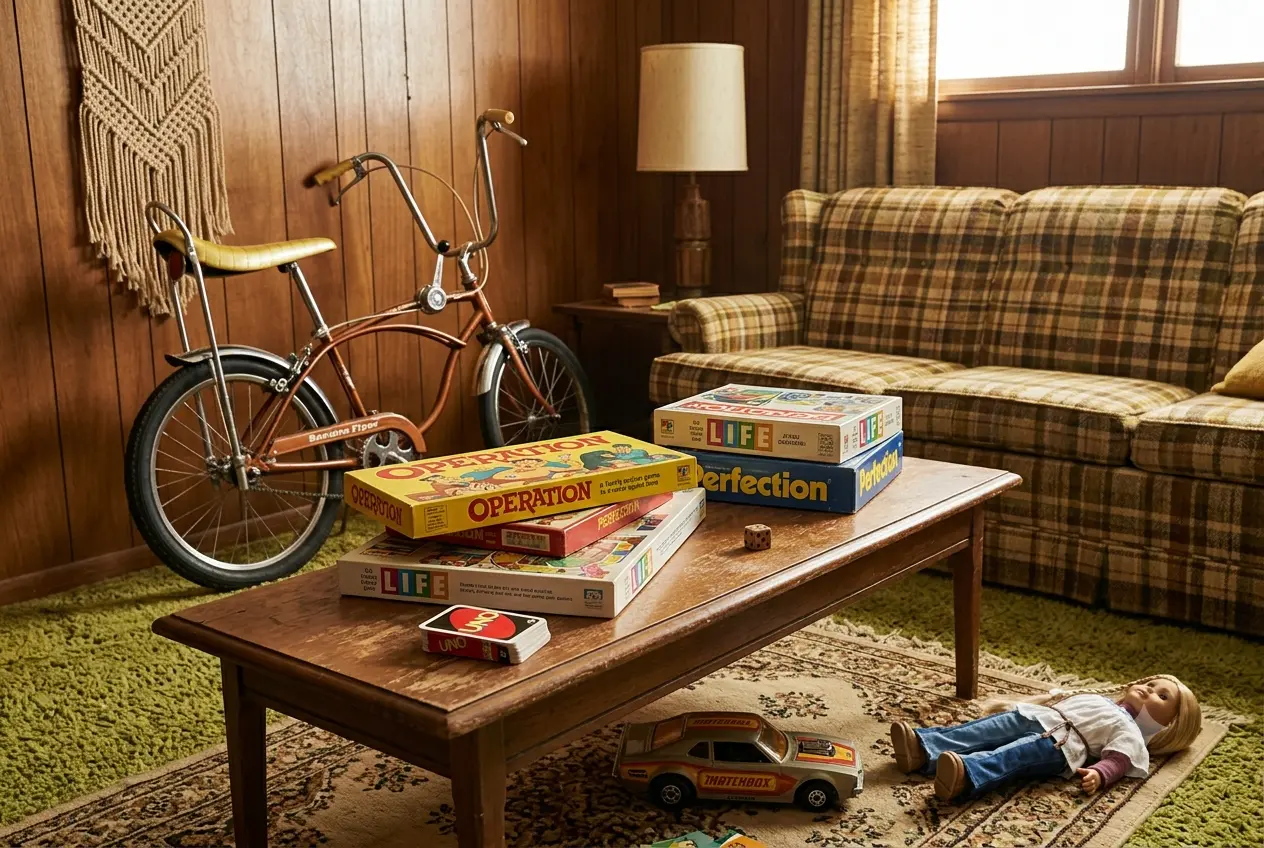
Children’s entertainment usually involved physical toys, imagination, outdoor activity, or games shared with other people.
🚲 Bicycles used around the neighborhood
🛹 Skateboards and outdoor toys
🎲 Board games played at the kitchen table
🚗 Model cars and construction sets
🪆 Dolls, dollhouses, and pretend household items
🧩 Puzzles stored in boxes and reused many times
Toys often showed signs of years of use.
They were repaired, shared with siblings, exchanged with friends, or passed from one child to another.
Shopping and Household Brands
Shopping habits were different before online ordering and same-day delivery.
Families used catalogs, newspaper advertisements, department stores, local shops, and shopping centers.
📰 Weekly advertisements helped families compare prices
📖 Printed catalogs introduced new products and gift ideas
🛒 Grocery lists were written by hand
🏬 Department stores combined clothing, furniture, appliances, and household goods
🎁 Layaway plans helped families prepare for larger purchases
Packaging was also memorable.
Boxes, cans, bottles, and labels often featured strong colors, large lettering, and illustrations that are immediately associated with the period.
Objects Families Rarely Threw Away
Household items were commonly reused for a different purpose after their original contents were gone.
A container might remain in the home for many years.
🍪 Cookie tins used for sewing supplies
🫙 Glass jars reused for food or small household objects
📦 Shoe boxes filled with photographs, letters, or receipts
🛍️ Shopping bags saved for future use
🎁 Gift boxes reused during another holiday
This habit made ordinary packaging part of the household.
People may remember a container more for what their family kept inside it than for the product it originally held.
Why These Memories Still Matter
Nostalgia is not only about believing that everything was better in the past.
It can also be a way of remembering people, places, routines, and stages of life that shaped who someone became.
A familiar object may recall a parent preparing dinner, a grandparent sitting in a favorite chair, children playing in the hallway, or relatives gathering around the table.
People rarely miss only the telephone, television, sofa, or kitchen table. They often miss the voices, routines, and relationships connected to those objects.
How Vintage Style Returned
Many design elements associated with the 1970s have returned in updated forms.
Warm colors, wood furniture, patterned fabrics, record players, houseplants, and rounded shapes can now be found in modern homes.
🪴 Large indoor plants and hanging planters
🎵 Modern record players and vinyl collections
🟠 Warm orange and gold decorative accents
🪵 Natural wood furniture and wall details
〰️ Rounded furniture and geometric patterns
Modern interpretations are usually simpler, but the influence is easy to recognize.
For some people, the style feels new. For others, it looks like something they once saw every day.
Remembering Several Homes
Not every memory comes from the house where someone lived.
People may remember the homes of grandparents, relatives, neighbors, and childhood friends.
🏠 A grandparent’s formal living room
🍪 A relative’s kitchen during the holidays
📺 A neighbor’s television where children watched a special program
🎵 A friend’s bedroom filled with records and posters
🧰 A parent’s or grandparent’s garage workshop
Each home had its own smells, sounds, furniture, and rules.
Those differences often make the memories especially vivid.
Sounds From Around the House
The decade can also be remembered through sound.
Many household objects made noises that have nearly disappeared from modern life.
☎️ The mechanical ring of a telephone
📺 The click of a television dial
🎵 The soft crackle before a record began
⏰ The movement of a flip-style clock
📸 The sound of an instant camera
🥫 The opening of metal cans and glass bottles
These sounds were part of the background of daily life.
Hearing one today can make a memory feel unexpectedly close.
Frequently Asked Questions
Did every American home look like this?
No. Homes varied according to region, income, family preferences, and housing style. However, many of these objects, colors, and designs became widely recognizable during the decade.Why were brown, orange, and green so common?
Warm earth tones were widely used in furniture, appliances, carpeting, wallpaper, dishes, and other household products.Were wood-paneled televisions common?
Large televisions placed inside wood-style cabinets were familiar pieces of living-room furniture in many households.Did most families have only one telephone?
Many households relied on one shared telephone, although some homes had additional extensions in bedrooms or other rooms.How did people know when television programs aired?
Schedules appeared in newspapers, printed television guides, and local listings. Viewers usually needed to watch a program at its scheduled time.Why are vinyl records popular again?
Many people enjoy the physical experience of choosing an album, viewing its artwork, and listening to music through a record player.Are original 1970s household items still available?
Yes. Original objects can still be found in family homes, antique stores, estate sales, thrift stores, collections, and online marketplaces.Why can ordinary objects create strong memories?
Everyday objects were present during repeated family routines. Over time, they became connected to particular people, places, and moments.
Which Ones Do You Remember?
Think about the home where you spent the most time during the 1970s.
You may remember the television, the telephone, the kitchen colors, the furniture, or the music playing in another room.
But the strongest memory may be something much smaller.
- A familiar clock hanging on the kitchen wall
- A record that someone played every weekend
- A chair where a relative always sat
- A recipe card written in a family member’s handwriting
- A photograph kept inside the same album for decades